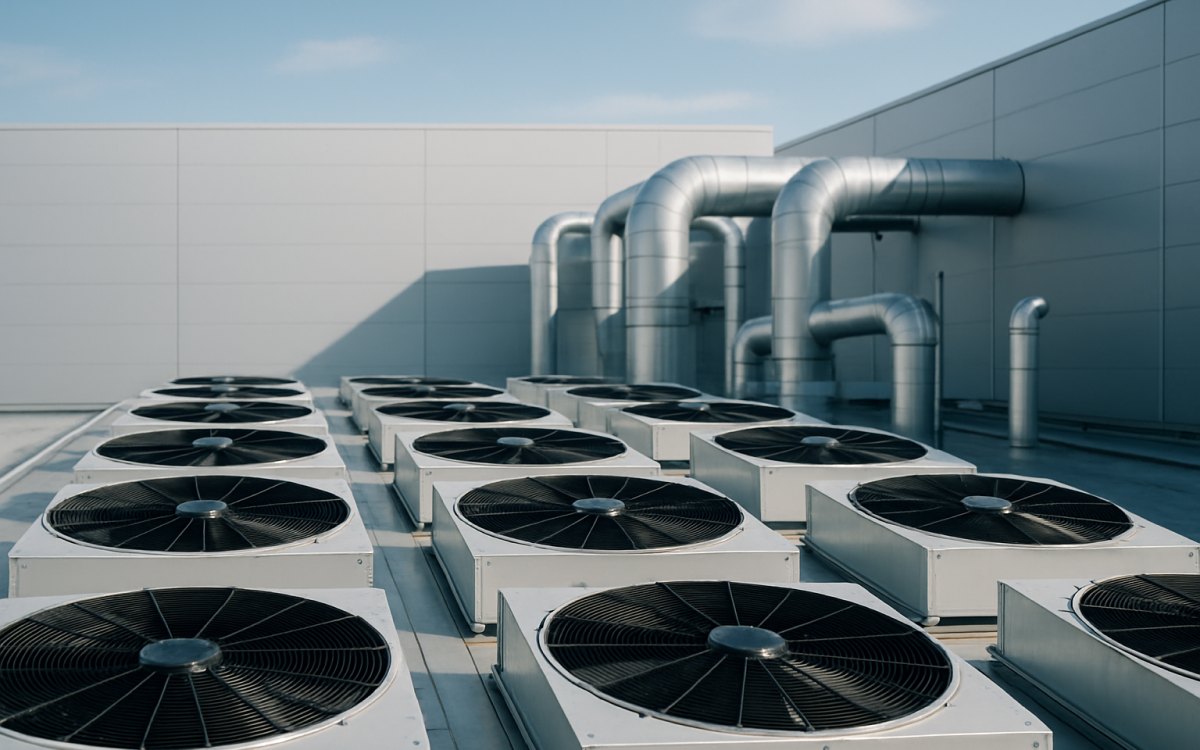
Behind every video call, cloud platform, streaming service, and online transaction, powerful computing facilities are working continuously to keep digital activity moving without interruption. As these environments expand, the heat generated by servers is becoming harder to manage through conventional cooling methods alone. Greater attention is now being given to systems that can reduce water usage while maintaining stable performance. Because of this shift, waterless cooling technologies are being adopted more widely across modern datacentres and large-scale computing environments.
The Limitations of Existing Cooling Infrastructure
Large-scale computing environments are known for generating significant heat. Without proper temperature management, equipment performance can be affected, and downtime risks may increase. In many facilities, cooling systems are required to operate continuously to maintain stable conditions.
Conventional methods have often depended on chilled water systems or evaporative cooling techniques. While these approaches have been effective for years, increasing concerns around water consumption are being noticed more frequently. In areas where water resources are limited or infrastructure costs are rising, alternative methods are being considered more seriously. Because of these operational pressures, cooling strategies are no longer being viewed only as maintenance requirements. They are also being treated as part of long-term infrastructure planning.
How Waterless Cooling Systems Work
Several technologies are now being used to reduce or eliminate dependence on water-based cooling. Air cooling remains one of the most recognised approaches, where controlled airflow is directed through server environments to manage temperatures efficiently. Liquid immersion systems are also being introduced in some advanced environments. In these setups, hardware components are placed in specially engineered non-conductive liquids that absorb heat more effectively than traditional air systems. Since water is not required during the cooling cycle, resource consumption can be reduced considerably.
Another growing approach involves direct-to-chip cooling, where heat is transferred away from processors using closed-loop systems. Less strain is often placed on facility-wide cooling infrastructure through these targeted methods. Across many modern datacenters, these technologies are being evaluated not only for efficiency but also for long-term operational stability.
Why Waterless Cooling is Gaining Popularity
Lower Water Dependency Is Becoming Important
Environmental resource management has become a bigger consideration for infrastructure operators. In facilities where thousands of litres of water may traditionally be consumed each day, concerns around sustainability and resource availability are difficult to ignore. Waterless cooling systems are being explored because they can help reduce pressure on local water supplies. This is especially valuable in regions where water access may already be stretched by population growth, industrial demand, or changing climate conditions.
Reduced dependency can also simplify facility planning. Extensive water treatment systems, piping infrastructure, and cooling towers may no longer be required in some setups. As a result, maintenance complexity can often be lowered. For operators trying to balance efficiency with environmental responsibility, this shift is being viewed as a practical infrastructure adjustment rather than simply a trend.
Energy Efficiency Is Being Prioritised
Power usage remains one of the largest operational concerns in high-performance computing environments. Cooling systems alone can account for a major share of total energy consumption within a facility. Newer waterless technologies are being designed to improve thermal management while reducing excess power usage. More precise temperature control can often be achieved through advanced airflow engineering, intelligent monitoring systems, and targeted cooling methods.
In some facilities, artificial intelligence tools are also being integrated to optimise cooling performance automatically. Temperatures, workloads, and airflow patterns can be monitored in real time so that energy waste is reduced without affecting performance. As efficiency targets become stricter, these smarter cooling systems are being seen as an important part of future-ready infrastructure.
Maintenance Challenges Can Be Reduced
Operational downtime can become costly when cooling systems require frequent maintenance or repairs. Traditional water-based systems may involve pumps, cooling towers, pipes, and water treatment equipment that need continuous monitoring. Waterless alternatives are often appreciated because fewer mechanical dependencies may be involved. Risks linked with leaks, corrosion, mineral buildup, or water contamination can also be lowered.
Simplified maintenance structures can make facility management more predictable over time. In large environments where uninterrupted service is critical, reliability is usually prioritised alongside performance. Because of this, operators are increasingly exploring systems that can deliver stable cooling without adding unnecessary operational complications.
Space Efficiency Is Supporting Adoption
Infrastructure expansion is happening rapidly as digital demand continues to grow. More processing power is being packed into smaller physical spaces, which creates additional thermal challenges. Modern cooling systems are being designed to support higher equipment density without requiring excessive floor space. Some waterless cooling technologies can be integrated more compactly than traditional setups, allowing facilities to optimise layout planning more effectively.
This flexibility is particularly valuable in urban environments where infrastructure space may already be limited. Efficient cooling without large water management systems can help simplify deployment in both new and existing facilities. For many operators, scalability is becoming just as important as cooling performance itself.
Regulations and Sustainability Goals Are Influencing Decisions
Environmental standards are being monitored more closely across technology infrastructure sectors. Organisations are increasingly expected to demonstrate efficient resource usage and reduced environmental impact within operational strategies. Cooling systems are naturally becoming part of these discussions because they directly influence both energy and water consumption. Waterless technologies are often being evaluated as a way to support broader sustainability goals while maintaining performance standards.
Investors, clients, and regulatory bodies are also paying closer attention to infrastructure efficiency metrics. Because of this, cooling decisions are no longer being made only from a technical perspective. Long-term operational responsibility is being considered alongside financial performance. As expectations continue to evolve, modern cooling strategies are likely to remain a key focus area across large-scale digital infrastructure.
Future Cooling Strategies Are Evolving Quickly
Cooling requirements are changing as computing environments become more advanced. Higher-density servers, artificial intelligence workloads, and continuous digital activity are placing additional pressure on traditional infrastructure systems. Waterless cooling is being adopted more widely because it offers flexibility, efficiency, and reduced resource dependency in environments where performance expectations continue to rise. While conventional methods are still widely used, alternative approaches are increasingly being integrated into modern facility planning.
Across the wider datacentre industry, cooling is no longer being treated as a background operational function. It is being recognised as a central part of reliability, sustainability, and long-term infrastructure resilience.