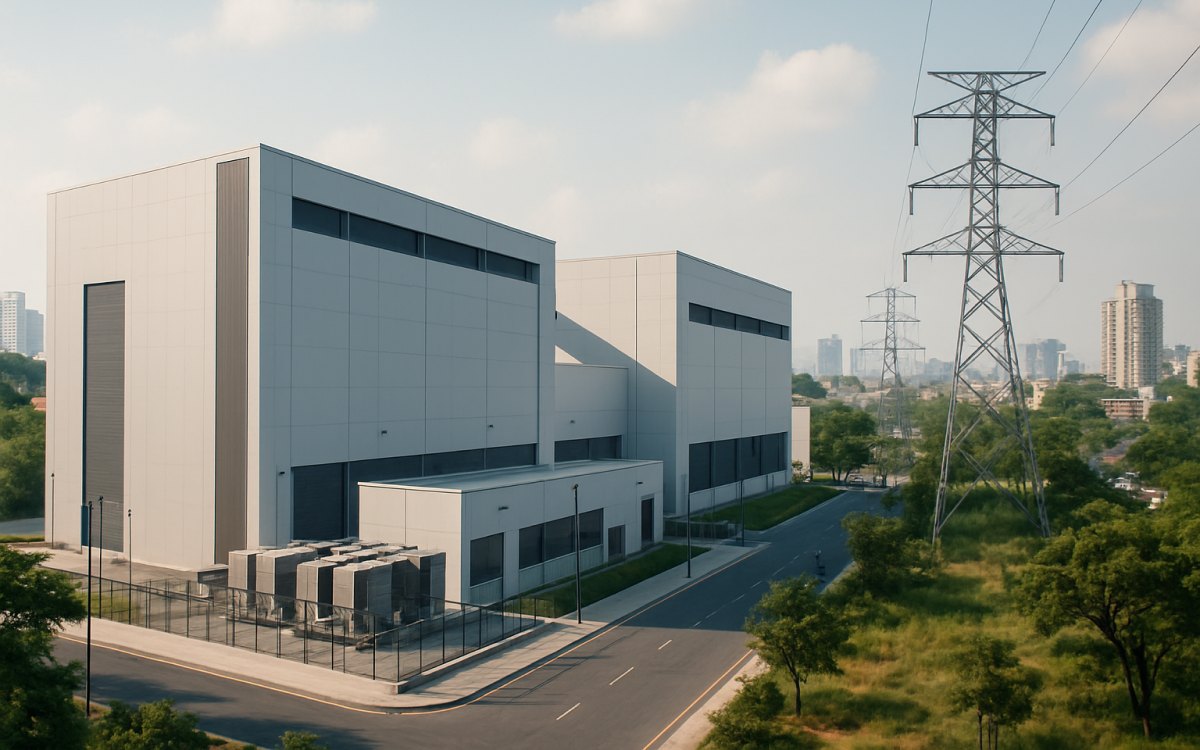
India’s digital infrastructure is undergoing a quiet but significant shift. For years, cities like Mumbai, Chennai, and Bengaluru have anchored the country’s data centre landscape — but that geography is changing. Tier-2 cities are now emerging as attractive sites for expansion, driven by rising digital demand, improving connectivity, and a new wave of investment flowing well beyond the traditional metros. The next chapter of India’s data story is being written in smaller cities.
Why Metros Are No Longer the Only Option
The concentration of data centres in India’s biggest cities made practical sense for a long time. Mumbai alone accounted for over 50% of India’s operational data centre inventory, anchored by its superior subsea connectivity and grid reliability. Collectively, Mumbai, Chennai, Delhi-NCR, and Bengaluru account for nearly 90% of the country’s established Tier-1 data centre capacity.
That dominance, though, is beginning to create pressure. Rapidly scaling AI and cloud infrastructure is placing unprecedented strain on power grids in high-density data centre hubs. Land scarcity, rising real estate costs, and congested metro networks are prompting operators to look elsewhere. Compared to metropolitan areas, the operational costs in Tier-2 cities are significantly lower — affordable real estate, lower labour expenses, and reduced power costs make these locations attractive for expansion.
The Drivers Behind Decentralisation
Several forces are converging to make Tier-2 cities a credible alternative. Driven by the requirements for lower latency, 5G proliferation, and data localisation, data centre operators are moving beyond traditional metro-centric models to direct sustained investment towards Tier-2 cities such as Ahmedabad, Visakhapatnam, Patna, and Bhopal, amongst others.
Latency is a particularly important factor. Sectors such as OTT streaming, gaming, and AI require ultra-low latency for seamless user experiences. Edge datacentres in Tier-2 cities bring computing power closer to consumers, significantly reducing response times and enhancing digital service performance.
Sustainability is another consideration gaining weight. The availability of land in these regions enables the implementation of green infrastructure, incorporating renewable energy sources such as solar and wind power. For operators under pressure to reduce their carbon footprint, smaller cities with access to open land present a genuine advantage.
Visakhapatnam: A Port City Redefining Its Identity
Few cities illustrate the scale of this transformation better than Visakhapatnam in Andhra Pradesh. Sify Technologies is building a data centre and cable landing station in Visakhapatnam, developed on 3.6 acres in the Rushikonda–Madhurawada IT Park, with a total capacity of 50 MW and a total investment of USD 168 million. The project aims to enhance sea-cable connectivity and AI infrastructure, positioning Vizag as India’s next global digital gateway.
That project sits alongside a far larger development. Google’s AI hub in Visakhapatnam is a multi-faceted investment of approximately USD 15 billion over five years, comprising gigawatt-scale data centre operations supported by a robust subsea cable network and clean energy, to drive the most demanding AI workloads in India. Visakhapatnam is set to play a central role in Andhra Pradesh’s expansion, with its capacity expected to rise to 2,000 MW from the current 50 MW. The numbers mark a remarkable transformation for a city better known for its port and steel industries.
Ahmedabad and Kochi: Building on Strong Foundations
Gujarat’s commercial capital is steadily cementing its position as a Tier-2 data centre hub. Ahmedabad has an upcoming data centre capacity of 80 MW, while the broader Jamnagar region in Gujarat carries a 3-gigawatt target underpinned by integrated renewables. Ahmedabad’s GIFT City presents facilities on par with international standards in financial services and ICT infrastructure, and the city’s favourable policy environment contributes to its status as a preferred destination for companies engaged in artificial intelligence and semiconductor research.
On India’s southwestern coast, Kochi is carving out its own niche. Kochi’s Infopark and SmartCity benefit from ultrafast underwater cable connectivity, and the city appeals to global companies for its high literacy and well-developed infrastructure. Kochi is gaining traction as a Tier-2 data centre location due to better land availability, improving digital infrastructure, and supportive state policies.
Lucknow, Patna, and Bhubaneswar: The Eastern and Central Corridor
The momentum extends well into India’s heartland and eastern states. Companies such as CtrlS have taken a proactive stance, already operating centres in cities like Patna and Lucknow, with plans to establish over 20 edge datacenters across Tier-2 locations.
New submarine cables and cable landing stations expanding connectivity into the country’s eastern and southern corridors are creating multi-path, low-latency routes that directly link Tier-2 hubs like Patna, Bhubaneswar, Lucknow, and Guwahati to global cloud networks. This infrastructure shift is vital — it addresses what was historically the primary barrier to data centre investment in these cities: connectivity. As that gap closes, operators are moving quickly to establish a presence.
These Tier-2 cities are expected to contribute a total of 150 MW to India’s datacentre pipeline.
Policy Support and What Lies Ahead
Government frameworks at both the central and state level are playing a meaningful role in accelerating this shift. At the central level, the National Data Centre Policy and initiatives under the Digital India programme are designed to create an enabling environment for data centre development nationwide. The government has introduced incentives such as tax benefits, subsidies on land, and streamlined access to electricity to motivate companies to establish data centres in smaller cities.
India’s datacenter market — valued at approximately USD 10 billion in 2025 — is expected to more than double to USD 22 billion by 2030. Operational capacity in Tier-2 markets is currently estimated at 60–80 MW and is expected to exceed 100 MW by the end of 2026.
A distributed infrastructure model reduces concentration risk and improves disaster recovery readiness. It also supports localised innovation, enabling startups in emerging cities to access enterprise-grade computing resources. For national authorities, local governments, and the broader technology sector, the direction is clear: the data centre story is no longer confined to India’s biggest cities. It is branching out — and the branch offices, in this case, are becoming powerhouses in their own right.